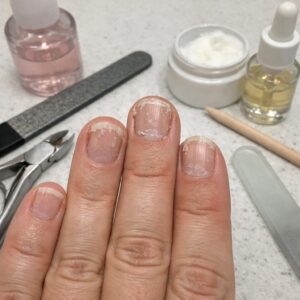
Are your “dry nails” actually damaged cuticles?
Cuticles are more than a thin strip of skin-they protect the nail matrix, where healthy nail growth begins. When they’re cut too aggressively, picked, or left dehydrated, nails can become weak, rough, and prone to infection.
This cuticle care guide explains how to clean, hydrate, and maintain your cuticles safely at home. You’ll learn what to avoid, what actually works, and how to keep your nails looking neat without compromising their health.
What Cuticles Do and Why Healthy Cuticle Care Matters
Cuticles are more than a thin strip of skin at the base of your nails. They help seal the space between the nail plate and surrounding skin, reducing the chance of bacteria, yeast, and irritants getting into the nail matrix where new nail growth begins.
One common mistake is cutting too aggressively during an at-home manicure. What many people call “cuticle” is often living skin around the nail fold, and trimming it with cheap manicure tools can lead to soreness, redness, hangnails, or peeling that makes nails look less clean even after polish.
Healthy cuticle care is especially important if you get gel manicures, use acrylic nails, wash dishes often, or work with cleaning products. For example, someone who removes gel polish by picking at it may notice dry, ragged cuticles within a week because the nail surface and surrounding skin lose moisture together.
- Use a quality cuticle oil or nail treatment daily, especially after handwashing.
- Gently push back softened cuticles with a clean tool like a Tweezerman cuticle pusher.
- Trim only loose hangnails, not the attached skin at the nail base.
Good cuticle maintenance also helps professional nail services last longer. Nail polish, builder gel, and press-on nails adhere better when the nail plate is clean and free of dry skin, which can reduce lifting and save money on frequent salon repairs.
The goal is simple: protect the skin barrier, keep the nail area hydrated, and avoid unnecessary damage. Clean, flexible cuticles make nails look healthier before you even apply polish.
How to Clean, Soften, and Moisturize Cuticles Safely at Home
Start by washing your hands with a mild hand soap, then soak your fingertips in warm water for 3-5 minutes. This softens dry cuticles without the need for harsh cuticle remover, which can irritate sensitive skin if used too often.
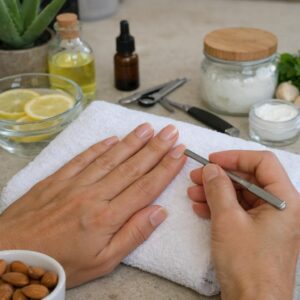
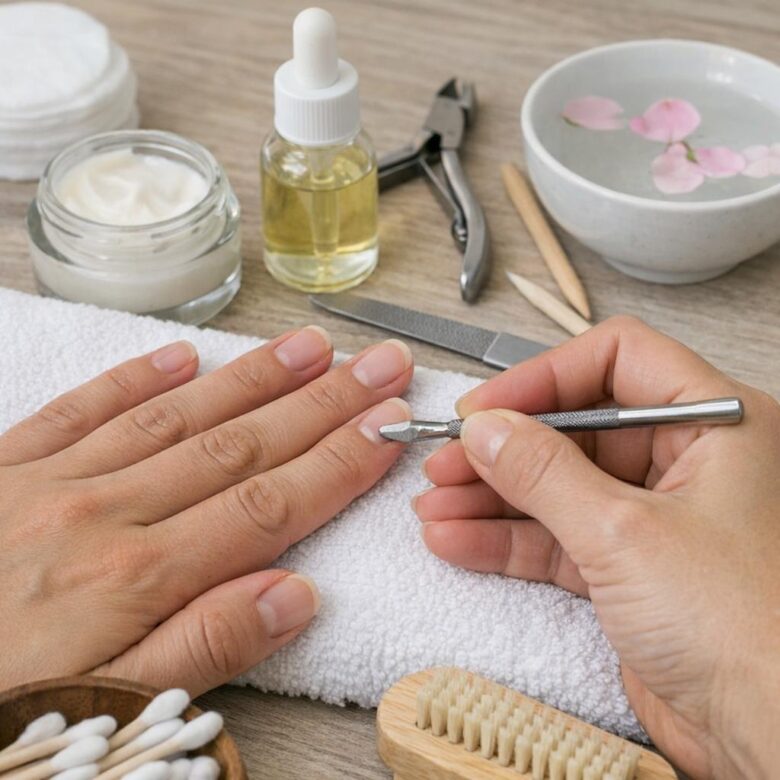
After soaking, pat your hands dry and gently push back only the loose cuticle using a clean orange wood stick or a Tweezerman cuticle pusher. Do not cut the living skin around the nail fold; that’s where many painful hangnails, redness, and nail infections begin.
- Use a soft nail brush to clean under the nail edge, not sharp metal tools.
- Trim only lifted hangnails with sanitized cuticle nippers.
- Avoid electric nail drills at home unless you are trained to use them safely.
For moisture, apply a cuticle oil with jojoba oil, vitamin E, or sweet almond oil, then seal it with a rich hand cream. A real-world trick: keep cuticle oil beside your laptop or nightstand so you use it daily, not just before a manicure.
If your cuticles are cracked from cleaning products, cold weather, or frequent gel polish removal, wear gloves when washing dishes and apply balm before bed. This simple routine can reduce the need for frequent nail salon repair services and helps your at-home manicure look cleaner for longer.
If you notice swelling, pus, throbbing pain, or a nail lifting from the skin, skip DIY treatment and contact a dermatologist or licensed nail technician. Safe cuticle care should feel comfortable, never sharp, burning, or painful.
Common Cuticle Care Mistakes That Lead to Dryness, Hangnails, and Infection
One of the biggest mistakes is cutting the cuticle too aggressively, especially with dull manicure tools. The cuticle acts like a seal between the nail plate and the skin, so removing too much can leave tiny openings where bacteria and yeast can enter.
Another common problem is using an electric nail drill incorrectly during a home manicure. I’ve seen people file too close to the nail fold after watching a salon-style video, then wonder why the area feels sore, red, or swollen the next day.
- Skipping cuticle oil: Dry skin cracks faster, so apply cuticle oil or hand cream after washing dishes, using sanitizer, or showering.
- Pushing back dry cuticles: Soften them first with warm water or a cuticle remover to avoid tearing the skin.
- Sharing tools: Clippers, nippers, and a cuticle pusher should be cleaned with alcohol, especially in shared households or salon settings.
Peeling hangnails is another small habit that can turn into a painful infection. Trim them cleanly with sanitized nippers, such as a quality Tweezerman cuticle nipper, instead of pulling the skin down the side of the nail.
Also be careful with harsh gel polish removal. Soaking too long in acetone or scraping with metal tools can dehydrate the nail area, making a professional manicure or nail repair treatment more expensive than simple daily care.
If redness, warmth, pus, or throbbing pain appears, stop applying polish and book a dermatologist or urgent care appointment. Early treatment usually prevents a minor cuticle injury from becoming a bigger nail infection.
Wrapping Up: Cuticle Care Guide: How to Keep Your Nails Clean and Healthy Insights
Healthy cuticles come from consistency, not aggressive grooming. The best choice is to protect the cuticle barrier, keep it moisturized, and avoid cutting unless there is a true hangnail or excess loose skin. If your nails often look dry, split, or irritated, simplify your routine before adding more products.
- Choose gentle pushing over trimming whenever possible.
- Use cuticle oil daily, especially after washing hands.
- See a professional if you notice pain, swelling, bleeding, or recurring infections.
Clean, healthy nails start with respecting the skin that protects them.

Dr. Claire Whitmore is a nail care educator and beauty researcher focused on healthy nail routines, elegant manicure techniques, and coastal-inspired nail artistry. Her work combines practical beauty guidance with refined, everyday nail care.