Are your nails peeling because they’re “weak”-or because your routine is quietly damaging them?
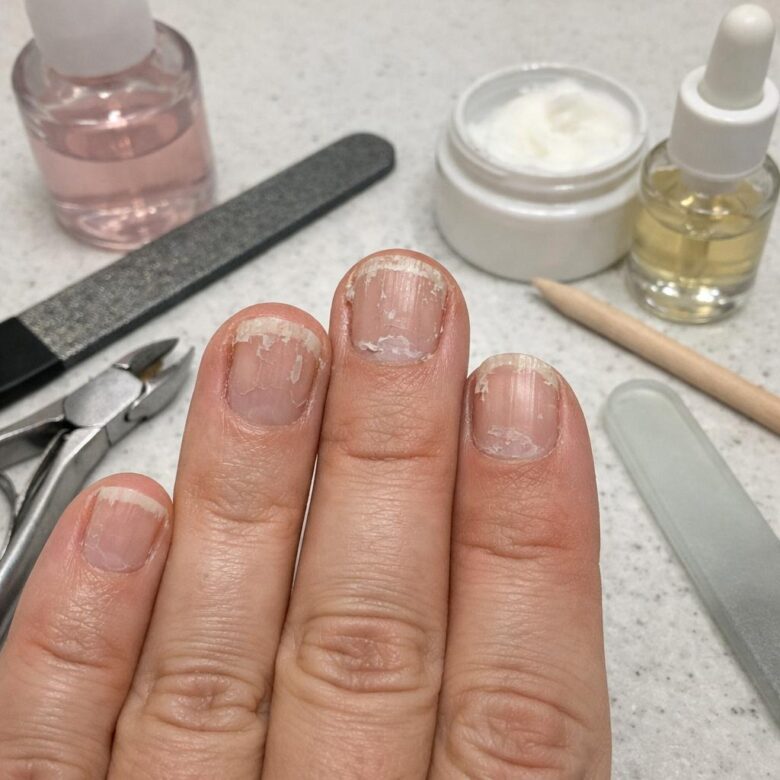
Peeling nails are usually a sign that the nail layers are drying out, splitting, or being stripped by everyday habits like frequent handwashing, gel removal, harsh cleaners, or picking at polish.
Sometimes, the cause is deeper: low iron, thyroid changes, nutritional gaps, or skin conditions can make nails thin, brittle, and prone to flaking.
The good news? Once you know what’s triggering the peeling, simple fixes-better hydration, gentler nail care, protective gloves, and targeted nutrition-can help your nails grow stronger and smoother.
What Peeling Nails Mean: Common Causes Behind Splitting, Flaking, and Weak Nail Layers
Peeling nails usually mean the nail plate is drying out, separating in layers, or being weakened by repeated stress. The most common pattern I see is from “wet-dry cycles”: washing dishes, using hand sanitizer, cleaning products, or soaking nails before a manicure, then letting them dry out without moisture protection.
Beauty routines can also play a big role. Frequent gel manicures, aggressive buffing, acetone-based polish remover, and improper gel removal can thin the nail surface, making it split or flake at the tips. A practical example: someone who peels off gel polish after two weeks often removes tiny layers of natural nail with it, then wonders why every nail starts bending.
- Moisture damage: water exposure, detergents, alcohol sanitizer, and skipped cuticle oil.
- Mechanical trauma: typing, picking labels, opening cans, or filing nails back and forth with a rough emery board.
- Health-related causes: iron deficiency, thyroid issues, eczema, psoriasis, or fungal nail infection may contribute, especially if nails change color or texture.
A glass nail file, nitrile gloves, and a quality nail strengthener can help protect weak edges while they grow out. Using a tool like the GERmanikure Glass Nail File or checking dermatologist availability through Zocdoc can be useful if peeling keeps returning despite better nail care.
If peeling comes with pain, yellowing, lifting from the nail bed, or sudden changes across many nails, it is worth booking a dermatologist appointment or asking about lab testing. Nail problems are often fixable, but the right cause matters.
How to Fix Peeling Nails at Home: Moisturizing, Nail Protection, and Diet-Based Solutions
Start with moisture, because peeling nails often get worse when the nail plate dries out from soap, sanitizer, acetone, or frequent water exposure. Apply cuticle oil or a thick hand cream after every hand wash, then seal it at night with petroleum jelly or a ceramide-based moisturizer; keeping a small tube near the sink makes this habit much easier.
For daily nail protection, think about what your hands touch most. A real-world example: if you wash dishes every evening, wearing Medline nitrile gloves with a thin cotton liner can reduce water damage and help prevent the free edge of the nail from splitting layer by layer.
- Use a glass nail file and file in one direction instead of sawing back and forth.
- Choose acetone-free nail polish remover when possible, especially if your nails already peel.
- Take a break from gel manicures, acrylic nails, and aggressive buffing until the peeling grows out.
Diet also matters, especially if your nails are thin, slow-growing, or brittle along with hair shedding or fatigue. Aim for steady protein intake, iron-rich foods, zinc, omega-3 fats, and biotin from foods like eggs, salmon, beans, nuts, and leafy greens; supplements may help some people, but it is smarter to ask a dermatologist or primary care provider before starting high-dose biotin, especially before lab testing.
If the nail is painful, discolored, lifting from the nail bed, or peeling only on one finger, do not treat it as simple dryness. In those cases, an at-home nail repair routine may not be enough, and a professional nail fungus test or dermatology visit can prevent months of wasted treatment cost.
When Peeling Nails Need Extra Attention: Red Flags, Care Mistakes, and Long-Term Prevention
Peeling nails are often caused by water exposure, harsh polish remover, or over-buffing, but some signs deserve a closer look. If one nail suddenly thickens, turns yellow or green, lifts from the nail bed, becomes painful, or the skin around it swells, book a dermatologist appointment or a telehealth consultation through a platform like Zocdoc.
A real-world example: someone who gets gel manicures every three weeks may blame peeling on “weak nails,” when the bigger issue is aggressive gel removal with scraping tools. Switching to acetone-free nail polish remover for regular polish, using a gentle gel manicure removal kit, and taking manicure breaks can make a noticeable difference.
- Don’t: peel off gel polish, over-file the nail surface, or use nails as tools to open cans or labels.
- Do: wear gloves for cleaning, apply cuticle oil daily, and use a fragrance-free hand cream after washing.
- Consider: a nail fungus treatment or medical nail care visit if peeling comes with discoloration, odor, or crumbling edges.
For long-term prevention, keep nails short while they recover and choose “3-free” or “10-free” nail polish if your nails react easily. If peeling continues for several months despite better nail care, ask about iron levels, thyroid testing, or nutrient deficiencies, since brittle nails can sometimes reflect a health issue rather than a cosmetic problem.
Wrapping Up: Why Are My Nails Peeling? Common Causes and Easy Fixes Insights
Peeling nails are usually a sign that your nails need less stress and more consistent care-not a reason to panic. Start with the basics: keep them short, moisturize daily, wear gloves for wet work, and avoid harsh polish removal or picking.
The key decision is timing: if your nails improve after a few weeks of gentler habits, you’re likely on the right track. If peeling continues, worsens, or comes with pain, discoloration, thickening, or skin changes, book a visit with a dermatologist. Healthy nails take time, but the right routine can make them stronger from the new growth onward.

Dr. Claire Whitmore is a nail care educator and beauty researcher focused on healthy nail routines, elegant manicure techniques, and coastal-inspired nail artistry. Her work combines practical beauty guidance with refined, everyday nail care.